
The freezer isn’t freezing any more – what should I check?
Is your freezer no longer able to maintain a sufficiently low temperature? Is your food going soft, are ice cubes melting, or is there an unusual build-up of frost? This fault must be taken seriously, as a temperature above -18°C can compromise the proper preservation of food. We’ll help you resolve this fault by explaining the causes of the problem.
THE POTENTIAL CAUSES FOR THIS FAULT:
-
The condenser is blocked with dirt
-
The door seal is worn or damaged
-
The evaporator is frozen over
-
The defrost heater has failed
-
The fan has stopped working
-
The temperature sensor is faulty
-
The thermostat is no longer regulating the temperature
-
The Klixon is faulty
-
The capacitor is faulty
-
The compressor has stopped working
WARNING
Before you do anything to your appliance, make sure you disconnect it from the power supply. There is a risk of electric shock. Wear suitable gloves if you carry out dismantling. Risk of cuts.
The condenser is blocked with dirt
 The condenser discharges the heat extracted from inside the freezer in order to maintain a sufficiently low temperature. Usually located at the back of the appliance, it can become covered in dust and dirt over time, which reduces its efficiency. The freezer then has to run for longer to reach the required temperature, and may eventually fail to freeze food properly. Regular maintenance is therefore recommended: use a vacuum cleaner fitted with a brush attachment to remove any build-up and maintain the appliance’s performance.
The door seal is worn or damaged
 A worn, torn or warped door seal allows warm, damp air to enter the freezer. This causes frost to form and forces the appliance to work harder to compensate for the loss of cold air. When the seal is no longer effective, the freezer may struggle to maintain a temperature low enough to freeze food properly. To check its condition, visually inspect the door seal. A simple clean with a damp cloth and mild soap may be sufficient if it is dirty, but if it is worn, warped or damaged, it will need to be replaced to ensure a proper seal.
The evaporator is frozen over
 The evaporator is the component that produces the cold inside the appliance. When it is covered with a significant amount of frost or ice, heat exchange becomes less efficient and cold air struggles to circulate through the freezer. This situation is often linked to a defrosting problem or excessive moisture entering the appliance. To check the condition of the evaporator, remove the panel covering it and inspect its surface. If there is a thick layer of ice, the freezer will need to be fully defrosted.
The defrost heater has failed
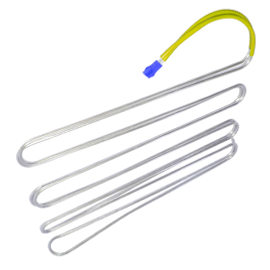 In freezers fitted with the No Frost system, the defrost heating element regularly removes the frost that forms on the evaporator. If it stops working, a layer of ice may gradually build up and prevent cold air from circulating properly. The freezer will continue to operate, but its efficiency will decrease until it can no longer provide sufficient freezing capacity. You can check its condition using a multimeter set to the ohmmeter function. After disconnecting its connectors, place the test leads on the heater’s terminals: if a reading is displayed, it is working; if not, it is faulty and will need to be replaced.
The fan has stopped working
 In fan-cooled freezers, the fan ensures that cold air is distributed evenly throughout the appliance. If it becomes blocked by frost or its motor is faulty, the cold air is no longer circulated properly. Some areas may then remain relatively cold whilst others warm up, resulting in food not being preserved properly. After unplugging the appliance, check by hand that the fan rotates freely. If there is any ice, remove it to restore normal operation. Dust can also hinder its rotation; in this case, cleaning it with a vacuum cleaner may be sufficient. If the problem persists, check the motor using a multimeter set to the ohmmeter function. A reading of ‘1’ or ‘OL’ indicates that the fan is faulty and will need to be replaced.
The temperature sensor is faulty
 The temperature sensor continuously transmits temperature data to the appliance’s circuit board. If it measures the temperature incorrectly or sends erroneous data, the control system may reduce or interrupt cooling at the wrong time. The freezer will then be unable to reach the temperature required to preserve food. To check this, measure the resistance using a multimeter set to kilo-ohms and then compare the result with the manufacturer’s specifications. If the measured value does not match the specifications, the sensor is probably faulty and will need to be replaced.
Buy a freezer temperature sensor
The thermostat is no longer regulating the temperature
 The thermostat measures the internal temperature and controls the operation of the cooling system. If it is faulty, it may send incorrect information and prevent the compressor from starting even when the temperature is too high. The freezer will then remain warmer than the set temperature and will no longer be able to freeze food properly. First of all, check the temperature displayed on your appliance: if it is above -18 °C, try selecting a colder setting and allow the freezer a few hours to stabilise its temperature. If the setting is correct but the compressor does not start and the appliance still does not produce enough cold, the thermostat needs replacing.
The Klixon is faulty
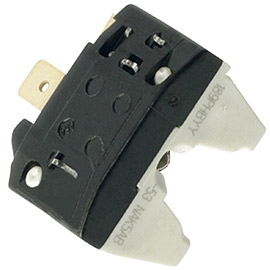 The Klixon is a safety device that protects the compressor from overheating. If it fails, it may prevent the compressor from starting even if the compressor itself is in good working order. The freezer will then no longer produce enough cold air, or perhaps none at all, despite having a proper power supply. You can test the Klixon using a multimeter set to the continuity function after removing it from the compressor. If a reading is displayed, the component is working. However, a reading of ‘1’ or ‘OL’ indicates that the Klixon is faulty and must be replaced.
The capacitor is faulty
 In some freezers, the capacitor helps the compressor to start. When it loses its capacity or fails, the compressor may struggle to start or fail to start at all. This fault often manifests as repeated start-up attempts accompanied by small clicking noises coming from the back of the appliance. The capacitor’s capacity is usually marked in microfarads (µF) on the component itself. You can test it using a multimeter set to capacitance mode. If the measured value differs from that specified by the manufacturer, the capacitor will need to be replaced.
The compressor has stopped working
 The compressor is the component that enables the refrigerant to circulate through the cooling circuit. If it fails to start or develops a leak, your freezer will no longer be able to produce cold air. You can check that it is running by listening for a soft humming sound or by noticing that it vibrates slightly when it is operating. If the compressor remains completely silent whilst the appliance is switched on, it may be the cause of the fault.